As long as an order arrives on time, no one thinks about the supply chain. It belongs to that category of infrastructure you notice only when it fails—like plumbing, whose existence becomes obvious the day the ceiling starts to drip. The rest of the time it runs in silence, and that silence is mistaken for the absence of stakes. A lever no one ever watches ends up being steered by default, until the day it breaks and abruptly becomes the only thing that matters.
A Lever You Only Look At Once It Breaks
Disruption is nothing exceptional, contrary to what the reflex of treating it as an accident would suggest. According to the McKinsey Global Institute, a company suffers a one-to-two-month disruption on average every 3.7 years—frequent enough to be near-certain over the lifetime of a business, spaced out enough to be forgotten between two. The same work puts the cumulative cost of these shocks at the equivalent of 45% of one year’s EBITDA over a decade. Far from the price of a rare black swan, this is a recurring cost line that companies simply refuse to provision for, because it appears on no budget.
The problem, then, isn’t that disruption exists, but that it gets discovered in real time. When a single supplier defaults, a lead time doubles, or a component goes missing, the company that never mapped its chain improvises under pressure—and improvisation, in logistics, comes at a steep price. The incident is the visible slice of the cost, and it hides the larger one: the blindness that let the problem build up unseen. What separates the companies that absorb the shock from those that buckle is almost never luck: it’s having looked at the chain before it demanded to be looked at.
Managing the Chain Means Arbitrating Between Cost and Resilience
For two decades, logistics was steered by a single dial: cost. Minimal inventory, the cheapest supplier, just-in-time flow—every link optimized for immediate spend. The logic holds as long as everything runs smoothly, but it amounts to betting that nothing will ever be interrupted. A chain trimmed to the bone is efficient and fragile: the two properties are two faces of the same decision. It’s the same trade-off at play when you set out to reduce your operating costs—cutting to the shortest path pays off in the short term and exposes you in the long term.
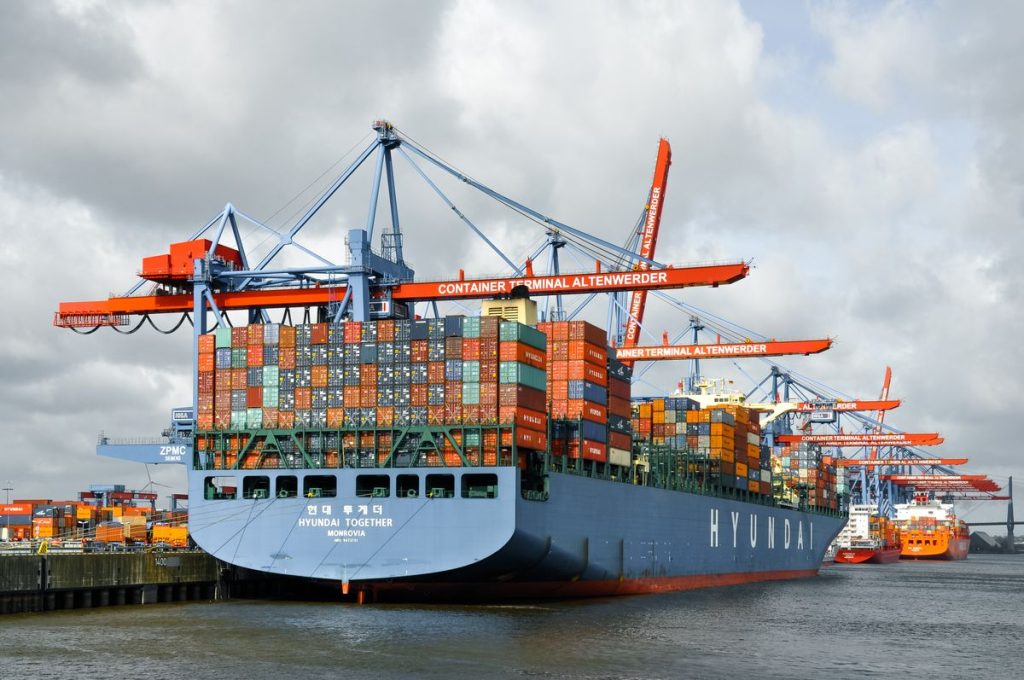
« Resilience » is not, for all that, a call to overstock everything and double up on every supplier—that would only swap one excess for another. It’s a trade-off to make explicit, line by line: on which critical components are you willing to pay a safety margin, and which can be left to just-in-time flow without real risk? The right level of resilience is the one you chose knowingly, rather than the one a crisis forced on you. Seen this way, a chain you actively arbitrate stops grinding down the margin and starts protecting it: managing it well makes it a genuine source of operational efficiency rather than a line to keep compressing.
This trade-off has a dimension no spreadsheet captures: the supplier relationship. A partner you only contact to renegotiate a price will warn you of nothing when pressure builds on their end; a supplier you talk with regularly flags difficulties before they turn into shortages. That early warning is exactly what a price-only relationship never produces, and the cheapest supplier on the market is rarely the one who calls to give you a heads-up. Downstream, the equation is just as direct: a slipping lead time or an incomplete order lands on the customer, who couldn’t care less which link gave way. A fragile chain always ends up eroding customer satisfaction, where it shows the most and repairs the slowest.
Making the Invisible Legible Before It Breaks
You can’t steer what you can’t see. Before any software or backup supplier comes a map. Knowing where each critical input comes from, which link it passes through, and above all where the single point of dependency hides—that supplier nothing can replace, that port through which everything moves—is worth more than any dashboard bought before those questions were asked. Most companies know their tier-1 suppliers and know nothing of tier 2, which is exactly where the costliest vulnerabilities sit.
Once the chain is mapped, technology takes on its meaning—but in that order, not the reverse. Real-time traceability, alerts on drifting lead times, and process automation of replenishment turn episodic vigilance into continuous monitoring. The point isn’t to pile up tools, but to shorten the delay between the moment a weak signal appears and the moment someone sees it. A disruption spotted three weeks ahead is a planning problem; the same discovery on the day itself is a crisis. The entire value of a well-managed chain lies in that gap of a few days.
Conclusion
The supply chain doesn’t need to be spectacular to be strategic—it needs to be watched before it forces you to. Treating it as mere plumbing to be optimized for lowest cost amounts to provisioning for the inevitable at the worst possible moment, under pressure and without visibility. What separates a company that absorbs a shock from one that suffers it comes down to one habit: reading the chain while there is still time to act, before equipping that reading with tools. The question to ask isn’t « can a disruption happen »—it will—but: if my most critical supplier disappeared tomorrow, how long would it take me just to find out?
If you’ve never mapped your chain beyond your direct suppliers, get in touch—it’s often the exercise that reveals the dependency you never suspected.