
« We need some AI. » The line drops into meetings today the way « we have to go digital » did ten years ago: with the same conviction, and the same vagueness. You adopt a tool because it’s in the air, you tick the innovation box, and six months later you’re surprised nothing moves any faster. The problem is almost never the technology itself. It’s that you laid it over a process without first asking where, exactly, the time was being lost.
Technology Amplifies Whatever Process You Hand It
One figure tempers the surrounding enthusiasm: according to McKinsey, close to 70% of large transformations fall short of their goals—not for lack of tools, but for lack of a clear « why » and an execution that follows through. The finding holds well beyond big corporations. Lay a technology over a sound process and it runs faster; lay it over a shaky one and it carries the same flaws downstream at full speed. Automating a poorly designed procedure doesn’t fix it: it simply fails faster, and at greater scale.
Take the most ordinary case. A company whose customer file is riddled with duplicates and dead addresses decides to automate its follow-ups: instead of one employee sending ten rough messages a day, the system now fires off thousands, just as rough, to contacts who no longer exist. The technology did its job perfectly—amplifying what it was handed. The original flaw didn’t disappear; it got industrialized.
That’s why operational efficiency isn’t won in the software aisle. It starts with an unglamorous question: where is time really being lost, and why? Until you’ve answered that, the best tool on the market only moves the problem around—or adds one.
Start With the Bottleneck, Not the Tool
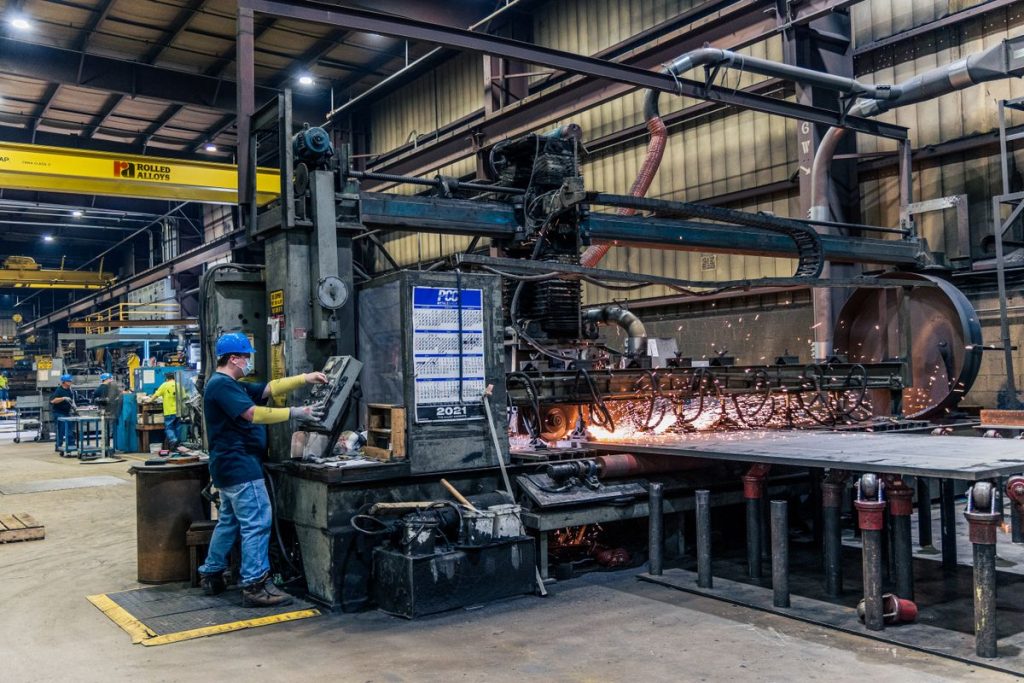
Identifying the point that holds everything else back changes the order of operations: you choose the technology to fit the bottleneck, not the other way around. Three families of constraints recur in most organizations, and each calls for a different kind of answer.
The first constraint is the repetitive tasks that eat up the day without creating anything: re-keying, manual follow-ups, copy-pasting between applications. This is the natural ground for process automation, which is only worth it if it frees up time for higher-value work—not if it becomes a project in its own right. The second constraint is the decision made blind, for lack of visibility into your own numbers: this is where data analysis, and AI when the volume justifies it, deliver a real gain—by turning scattered data into usable signals. The third is the physical blind spot: stock, equipment, or a supply chain you can’t see in real time. Connected sensors (the « Internet of Things ») fill that gap by flagging a problem before it gets expensive.
The logic is always the same: the technology is a means in service of an identified constraint. A tool earns its keep when it’s tied to the precise bottleneck it lifts: follow-ups that reach real contacts, a stockout caught before it costs a sale. Adopted for its own sake, it stays a line on the budget with nothing concrete behind it. There’s no need, by the way, to aim for the most sophisticated solution: a well-kept spreadsheet sometimes solves what a five-figure platform wouldn’t handle any better.
That leaves the factor failed projects underestimate the most: the people who’ll have to use it. If McKinsey ties the failure of so many transformations to the absence of a clear « why », it’s because the root cause is rarely technical. A tool imposed without explaining the constraint it lifts, and without supporting the people whose habits have to change, ends up sidestepped—everyone quietly reverts to the old method, running it alongside the new one. The promised efficiency then dissolves into a double entry no one had planned for.
The Tool-Debt Trap
There’s a cost rarely measured until it starts to weigh: the pile-up of tools that don’t talk to each other. By adding one piece of software per problem, you end up with a layer cake where information is copied from one system to the next, by hand, by people who spend their days bridging the gaps. Every tool that doesn’t communicate with the others creates work instead of removing it. Efficiency then comes not from one more tool, but from the coherence of the whole.
On top of that integration cost sits a skill cost no one bothers to price: every new tool has to be learned, configured, kept up to date. Multiplied by a dozen applications, that onboarding time ends up exceeding the hours you hoped to save—not counting the features paid for and never used. A small but genuinely mastered toolset almost always returns more than an impressive collection you exploit only a fraction of. Keeping the toolset deliberately small is, in itself, a way to protect that efficiency.
Before acquiring another building block, two questions spare a good deal of regret: does it integrate with what already exists, and who will be responsible for keeping it alive once the novelty wears off? A tool without an internal owner ends up as a subscription you pay without using anymore—a quiet but real form of operational cost to keep an eye on.
Conclusion
Technological innovations keep their efficiency promises on one condition: that they answer a real constraint rather than a trend. The right reflex isn’t to ask which technology to adopt, but where the loss of time or money comes from—then to choose the simplest tool that resolves it, and to check that it fits with the rest. The question to ask before the next software purchase: which precise bottleneck does this tool make disappear, and how will I know in three months?
If you’re torn between several solutions without being sure which problem they really solve, get in touch—clarifying the bottleneck before the tool remains the most profitable conversation there is.


Pingback: Backup Strategy: The Operational Risk Leaders Miss